

Non categorizzato Article Count: 3
English Article Count: 0
About Us Article Count: 1
Plundered Oceans Article Count: 9
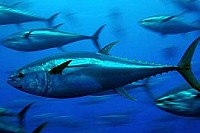 This is a whistle stop tour around the oceans. We used to think they were huge and inexhaustible. Huge they are, covering more than 2/3 of the surface of our 'blue planet'. But inexhaustible?
-
Look at the highlights in this section to realise that this is not so.
-
Luckily, there are still beautiful stretches of oceans left. But see how 'shifting baseline' (particularly in our own perceptions) is playing tricks on how we get used to destruction faster than it's happening.
-
Explore what you can do to help stop the plunder and destruction.
-
Team up with others near and far – together we can achieve more, have fun and learn something as well.
Each category gives you a few highlights so that you get a sense why leaning back and relaxing might not be a good idea. You will discover additional background materials by clicking on the links as we add information. Our sections publications, links and reviews provide you with additional resources to dig deeper into the issues and explore what the big picture is, but also what it may mean in your local context.
The sections exhibitions and projects show what we have already done or are doing at the moment.
The section 'What to do' proposes things you can do, including links to support-worthy campaigns, petitions and activities, and of course, participate in specific Mundus maris activities. Individually, we will not be able to ensure sustainable behaviour, but collectively, we can do much, not the least by participating in ordinary political processes to ensure good rules and their effective enforcement. It's not too late and many others are already active to save our seas and restore them to a healthy state. Add your voice and action.
What to do? Article Count: 8
 You have found a lot of indications on what goes wrong with the seas on our planet and why you need to be concerned, even if you do not live directly by the seashore.
We do not, however, want you to feel helpless and disenfranchised.
Something can be done, a lot is being done already and you can add your voice and action to the chorus so as to improve the results. This section is currently under construction, so check regularly for updates.
Here are a few ideas:
Support Us Article Count: 2
 Mundus maris addresses critical issues about reconnecting to the ocean and to each other, about healing the damage done and about blending different ways of making sense of the world and the ocean through the sciences and arts.
Let's dare to innovate! Let us together create new opportunities for enjoying the beauty of the ocean, its creatures and the maritime cultures and to protect them from the many threats affecting their health. Let's seize the opportunities together!
"We are called to be the architects of the future, not its victims."
R. Buckminster Fuller
The seafood we eat Article Count: 15
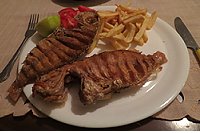 The ocean provides seafood in amazing variety and quantity. The average per capita consumption is estimated by the Food and Agriculture Organization of the UN (FAO) at approximately 16 kg per year. This may well be an underestimation as significant quantities of seafood produced by artisanal fisheries for commerce and self-consumption never makes it into the official statistics, not to mention the serious problem of illegal, unreported and unregulated (IUU) fisheries.
The seafood we eat and how we eat it is influenced by culinary traditions and by the culture we live in or are exposed to. Some cultures have richer traditions and more recipes than others, but global trade and travel ensure that ideas and recipes travel as well. The recent fashion of Japanese suchi is a case in point.
This section explores different aspects of seafood, food security, health and sustainability issues and how to navigate the sometimes bewildering diversity.
Projects Article Count: 0
 This section shows projects carried out or supported by Mundus maris. In general and if not specifically mentioned, all project activities are open to the participation of organisations, groups and individuals who are interested in advancing the pursued objectives. Here we share works in progress.
Financial support is also most welcome, particularly to develop collaboration with scientists, artists and youth groups in developing countries, including the improvement of their working conditions. Have a look as well into the section 'What to do?'. You'll get some more ideas, where you can bring to bear your personal strengths and motivation.
Please send your donation to Mundus maris to our account at Belfius Bank, Brussels, Belgium:
| IBAN: | BE54 | 0688 | 9178 | 6297 | BIC / SWIFT: | GKCCBEBB |
Projects 2024 Article Count: 19
 2024 is the year of efforts to finalise, ratify and implement major international agreements to safeguard nature on our planet and ourselves. The binding treaty to curb the plastic flood should be agreed by the end of the year. Two global biodiversity agreements need accelerated ratification to move fast into the implementation phase: the Kunming-Montreal Global Biodiversity Framework Agreement and the Treaty for protecting the high seas (BBNJ) which should allow us to protect 30% of the planet across all ecosystems by 2030 to stopp the on-going mass extinctions. Particularly important for ocean health and recovering its productivity is the long-awaited reduction of harmful fisheries subsidy the World Trade Organization (WTO) is expected to deliver at long last. Together, these could spell breakthroughs of healing our planet if cooperation would replace aggression and human rights also of disadvantaged people were respected and implemented. We work with others supporting these goals, and specifically towards sustainable artisanal fisheries for better futures.
Projects 2023 Article Count: 25
 2023 will be a year focused on implementing international agreements. We will continue to prioritise action in support of prosperous and sustainable artisanal fisheries through the Small-Scale Fisheries Academy with emphasis on the implementation of global Sustainable Development Goals and the Voluntary Guidelines for Ensuring Sustainable Small-Scale Fisheries at local and national levels underpinned by academic work. In this context, we shall continue participating in advocacy with the WTO and its member states to ratify the agreement for phasing out harmful fisheries subsidies while also engaging in further negotiations to close remaining gaps. The “Kunming-Montreal global biodiversity framework,” adopted at COP15 in December 2022 sets global targets for urgent action between now and 2030. Target 3—the 30 by 30 goal—is the most momentous and needs to be pursued with engaged and informed consent for siting of protected land and marine waters by indigenous groups and artisanal fishers and farmers. The UN Decade of Ocean Science for Sustainable Development (2021-2030) is gaining momentum to improve our understanding of the ocean and enhance ocean literacy. We will, among others contribute again with activities on and around World Ocean Day, 8 June.
Projects 2022 Article Count: 25
 2022 is the International Year of Artisanal Fisheries and Aquaculture (IYAFA2022). With several postponements due to the pandemic it's an even more crucial year for the ocean than 2021 was expected. The Second UN Ocean Conference is scheduled in June in Lisbon, a major conference on biodiversity should set new targets to revert us from the trend to mass extinctions, more countries are making commitments towards ocean protection expected to translate into more concrete delivery, including bringing to a successful close the on-going UN negotiations about protecting 30% of the ocean and 30% of the land area by 2030 (30 X 30). All this must bring about changes to our wasteful production and consumption patterns. The UN Decade of Ocean Science for Sustainable Development (2021-2030) is getting into gear and improve our understanding of the ocean and enhance ocean literacy. And we continue to put pressure on the World Trade Organization's (WTO) negotiation to phase out harmful fisheries subsidies, which must finally deliver. That would also be an important step to curb widespread Illegal, Unreported and Unregulated (IUU) fishing costing legitimate businesses and developing countries' fiscal authorities billions as well as constituting a major threat to viable and prosperous small-scale fisheries. We will continue our advocacy and awareness-raising activities in these directions and keep supporting the implementation of global Sustainable Development Goals and the Voluntary Guidelines for Ensuring Sustainable Small-Scale Fisheries at local levels underpinned by academic work.
Projects 2021 Article Count: 33
 2021 is a crucial year for the ocean. Not only are major conferences on biodiversity and climate expected to set us on pathways towards profoundly more responsible ways to organise our energy demands and change our production and consumption patterns accordingly; the start of the UN Decade of Ocean Science for Sustainable Development (2021-2030) promises advances in international cooperation to eliminate many white spots on ocean maps and enhance ocean literacy. We also expect advances in the on-going UN negotiations about protecting 30% of the ocean by 2030 (30 X 30). This is necessary to safeguard biodiversity, avoid fishery collapse and build ocean resistance to climate change. And we continue to put pressure on the World Trade Organization's (WTO) negotiation to phase out harmful fisheries subsidies, which missed last year's deadline but is not at all off the table. On the contrary, it is one of the important steps to curb widespread Illegal, Unreported and Unregulated (IUU) fishing costing legitimate businesses and developing countries' fiscal authorities billions as well as constituting a major threat to viable and prosperous small-scale fisheries. We will continue our advocacy and awareness-raising activities in these directions and keep supporting the implementation of global Sustainable Development Goals and the Voluntary Guidelines for Ensuring Sustainable Small-Scale Fisheries at local levels underpinned by academic work.
Projects 2020 Article Count: 11
 Our pledge to support implemenation of Sustainable Development Goal (SDG) 14 "Life Under Water" taking into account its links with other SDGs provides strong guidance for our continued efforts to link global issues - challenges and opportunities - to regional, national and local actors and actions. We continue to invest into the development of the small-scale fisheries academy and are keen to team up with others to expand internationally to facilitate scaling up efforts to implement the SSF Guidelines. The youth contest for Mundus maris Awards and events to celebrate World Oceans Day will again feature on our agenda - this year's UN motto is "innovation for a sustainable ocean". The forthcoming UN Decade of Ocean Science for Sustainable Development (2021-2030) will see active preparations enter into their final stage this year.
Projects 2019 Article Count: 27
 Our pledge to support implemenation of Sustainable Development Goal (SDG) 14 "Life Under Water" taking into account its links with other SDGs provides strong guidance for our continued efforts to link global issues - challenges and opportunities - to regional, national and local actors and actions. The youth contest for Mundus maris Awards and events to celebrate World Oceans Day will again feature on our agenda as part of connecting us all to the ocean and its improved protection. We shall continue with our awareness raising work in several countries and put additional effort in seeking partnerships with others to increase reach and effectiveness of activities with a focus on implementing year one of the small-scale fisheries academy in Senegal, open to expression of interest in other countries. The forthcoming UN Decade of Ocean Science for Sustainable Development (2021-2030) will see active preparations throughout this and the next year.
Prize 2019 Article Count: 19
Projects 2018 Article Count: 24
 Following on from the first UN Ocean Conference ever in 2017 and our pledge to support implemenation of Sustainable Development Goal (SDG) 14 "Life Under Water", we will continue our efforts to link global issues - challenges and opportunities - to regional, national and local actions. The youth contest for Mundus maris Awards and events to celebrate World Oceans Day will again feature on our agenda as part of connecting us all to the ocean and its improved protection. We will continue to seek partnerships with others to increase reach and effectiveness of activities and this year start our exploration about the best ways to implement the small-scale fisheries academy.
Projects 2017 Article Count: 14
 In 2017, the challenge will be on translating the Sustainable Development Goal 14 "Conserve and sustainably use the oceans, seas and marine resources for sustainable development" into practical action on the ground in every country and region. Mundus maris will continue its activities along the lines of doing and sharing research and conducting and supporting cultural activities about the major threats to the ocean and what we can do together about them. World Oceans Day activities will again constitute a highlight of our annual work programme. The youth contest and the partnering with others to offer events around 8 June will afford excellent opportunities to engage for the ocean and the people of the sea.
.
Projects 2016 Article Count: 16
 In 2016, a major focus will be on implementing the various international, regional and national commitments for protecting the ocean and the climate. Mundus maris will continue its path of doing and sharing research and cultural activities about the major threats to the ocean and what we can together do about them. World Oceans Day activities will again provide an excellent opportunity for connecting more and more people to the ocean and the people of the sea.
.
Projects 2015 Article Count: 15
 2015 is an important year for the ocean and the people of the sea in more than one way. Climate negotiations should lead to an ambitious global treaty. The Millennium Development Goals should be succeeded by post 2015 objectives and we will only know at the end whether country representatives agree to a specific objective for the ocean, the giver of life. Food security is a continued concern for millions of people. In Europe, the major challenge is implementing the reform of the Common Fisheries Policy effectively on the ground. Mundus maris will continue its path of doing and sharing research and cultural activities about the three major threats to the ocean and what we can together do about it. We engage with others in developing the new narratives of sustainable living with the ocean and take action together.
Projects 2014 Article Count: 13
 Cooperation with other organisations with whom we share objectives and concerns is a major thrust for project-based activities in 2014. Among these are major academic, public and civil society organisations. The 2014 programme will again contribute several activities to Campus Plein Sud at the Free University in Brussels (ULB), such as a lunch debate with major personalities about the international dimension of implementing the reform of the European Common Fisheries Policy. One of the academic highlights will be the international roundtable sponsored by the Peter Wall Institute for Advanced Studies at the University of Vancouver, Canada. We also hope to galvanise young people to protect our oceans through the invitation for international school partnerships to celebrate World Oceans Day 2014 together under the auspices of Mrs. Maria Damanaki, member of the European Commission. Come with us on the journey.
Projects 2013 Article Count: 14
 Our activities in 2013 are set to consolidate existing lines of work, while also diversifying activities and collaborations. This is reflected in increased use of our website and the social media as a resource in support of those activities. Likewise, Mundus maris members and associates participate in and contribute to other organisations' activities, always in pursuit of advancing the objective of critically engaging people of all ages, but particularly young people, in living in better harmony with the sea, nature in general and fellow citizens. Mobilising the sciences and the arts together is a key to addressing the challenges to our societies in an effective way and join forces to protect our seas, the origin of life and intimately linked to climate, biodiversity and the very shape of many of our societies.
Projects 2012 Article Count: 15
 Our activities in 2012 are set to consolidate existing lines of work, while also diversifying activities and collaborations. This is reflected in increased use of our website as a resource in support of those activities. Likewise, Mundus maris members and associates participate in and contribute to other organisations' activities, always in pursuit of advancing the objective of critically engaging people of all ages, but particularly young people, in living in better harmony with the sea, nature in general and fellow citizens. Mobilising the sciences and the arts together is a key to addressing the challenges to our societies in an effective way and join forces to protect our seas, the origin of life and intimately linked to climate, biodiversity and the very shape of many of our societies.
Projects 2011 Article Count: 11
 The expansion and diversification of activities and actors, collaborating with Mundus maris continues in 2011 and is also reflected in increased use of our website as a resource in support of those activities. Likewise, Mundus maris members and associates participate in and contribute to other organisations' activities, always in pursuit of advancing the objective of critically engaging people of all ages, but particularly young people, in living in better harmony with the sea, nature in general and fellow citizens. Mobilising the sciences and the arts together is a key to addressing the challenges to our societies in an effective way and join forces to protect our seas, the origin of life and intimately linked to climate and biodiversity.
.
Projects 2009-2010 Article Count: 5
 2009-2010 is seeing Mundus maris developing activities around its core objectives. We are also diversifying what we do focussing on expanding the school network, organising exhibitions, conducting lunch debates and producing printed materials in view of building up a portfolio of projects and resources about the sea and the people of the sea.
This section covers a selection of specific projects. Exhibitions we organise alone or in partnership and other activities are covered in the respective other sections.
Between Tradition and Modernity Article Count: 19
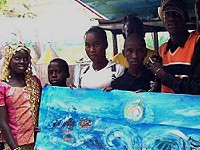 A series of articles, studies and projects, which explore the tensions communities experience in different parts of the world when local traditions clash with the conditions and demands of an increasingly globalised world. Nowhere is this more visible than in fisheries and coastal zones, where most fisheries products originate from, close of 40% of which is traded internationally. That means, even once remote villages and traditional lifestyles are confronted with the demands, threats and opportunities of a global market. Perhaps only the communication revolution is having more profound effects on values, perceptions and the way people make sense of what's happening and how they navigate these waters.
.
Exhibitions Article Count: 0
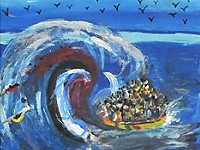 This section presents exhibitions supported by the Initiative. Each exhibition presentation is intended as a stand-alone piece with explanations woven into the text. Several have three parts: preparations, the exhibition proper and follow-up. Each part gets elaborated as work progresses.
Donations are welcome to contribute expanding cooperation particularly with scientists, artists and youth groups in developing countries and to help improve their working conditions.
Special account Mundus maris - IBAN: BE54 0688 9178 6297 - BIC/SWIFT: GKCCBEBB.
FESMIR 2013 - Mirror Festival of Dakar, Senegal Article Count: 1
 The International Artistic Mirror Festival of Dakar is an annual event masterminded by multi-talent artist Mamadou Ndiaye "THIA". This year's motto is taken from the title of the 2002 documentary "Battle for the Sea" of the Senegalese film director Moustapha Ndoye. Ndoye passed away prematurely, but has left a lasting impact on the collective memory. Mundus maris supported the festival organisation e.g. with special emphasis on the maritime content and the children's part.
SeeArt - Youth Exhibition, Hilden, Germany 2011 Article Count: 7
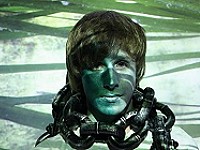 SeeArt - youth exhibition - Sciences and Arts for Sustainability. Hilden, Germany, 26 June to 17 July 2011.Together with the Municipal Gymnasium Helmholtz and the Municipal Office for Culture in Hilden, Mundus maris is organising a youth exhibition bringing together artistic reflections on the sea.
Dakar Biennale, 7 May - 7 June 2010 Article Count: 1
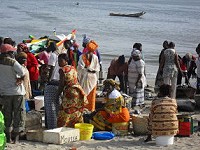 The Biennale of Dakar has taken place in 2010 from 7 May to 7 June in the Senegalese capital. It is THE meeting place for contemporary African art in Africa and in the diaspora. Click on the official website here. Members of the Mundus maris Association and people associated with it are actively participating. Among them is Nduwhite Ahononu Ndubuisi from Nigeria.
From Darwin to Sustainable Seas, 2010 Article Count: 6
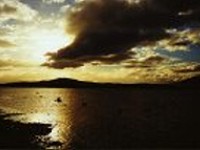 This poster exhibition was created in the occasion of commemorations of and reflections on the Bicenternary of Latin American independencies in order to add another dimension to the many events in this occasion, which are often focused on political and historical developments. It spans an arch from Darwin's inquisitive and open-minded spirit as he applied it to fishes and the marine environment in Latin America to what subsequent generations of scientists are making available to a wide public and artistic ways of reflecting on the sea.
Amsterdam, July 2009 Article Count: 3
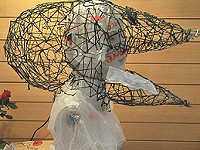 The International Initiative 'Science, Arts and Sustainable Seas' was offered the opportunity for an exhibition 'Sustainable Seas Through the Eyes of Art' associated with the V MARE Conference 'Living with uncertainty and adapting to change' in Amsterdam, 9-11 July 2009. The venue of the exhibition is the historic university building, Oudemanhuispoort 4-6, 1012 DL Amsterdam.
Brussels, May 2008 Article Count: 3
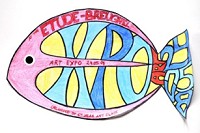 This exhibition showed paintings and installations of students from the European School Brussels I, Belgium, and from the College (CEM) in Kayar, Senegal. The theme was sciences and arts for sustainable seas. It was organised in the occasion of the 50th Anniversary of the European School Brussels I in Uccle, 23-24 May 2008, under the auspices of European Research Commissioner, Dr. Janez Potočnik.
Encounters Article Count: 0
 Our relationship with the sea takes on countless forms. To some it speaks through scientific study, to others through art work, many enjoy surfing, bathing and angling. For entire communities it means their livelihoods. It connects distant lands and people. Even those not living next to the sea are often fascinated with the folklore and myths lingering in many cultures. Here we share encounters with different people explaining their personal or professional relationship to the sea.
Come on board for a ride, enjoy the caleidoscope of stories and comments. Contribute your own by contacting This email address is being protected from spambots. You need JavaScript enabled to view it..
Artists Article Count: 8
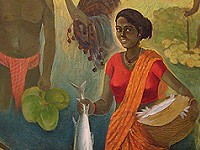 What do artists want to tell us about the sea or get us to discover? How do they arouse our sensitivity and let us share their experience or understanding of the sea?
Scientists Article Count: 11
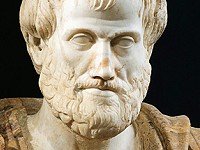 Scientists study the oceans in different ways from artists, but may be as passionate about the seas. Curiosity and practical needs have induced study of the seas and their creatures since antiquity.
More recently, as a result of a public invitation on facebook to suggest questions, we've been asking several scientists what they consider the greatest threats to the oceans and what they suggest to do about them.
The resulting video interviews, TED talks of leading scientists fascinated by the oceans and more are here for you to discover.
People of the Sea Article Count: 10
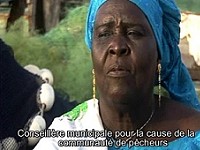 The ocean does not only provide much of the air we breathe and makes our climate. Many people and entire communities depend on the sea for their living in other, very direct, ways. Small-scale fishers and gleaners of seafood have often a more intimate relationship with the sea than even seafarers on modern high ships or workers on offshore platforms. Traditional practices, where they still exist, often entailed protective measures in the form of the sacred. Much of this has been lost in 'modernity'. How do these different people experience the sea, what do they see as their most important challenges and what are their aspirations? There are as many perspectives as people - discover at least some of them.
 Reviews Article Count: 0
 This section contains reviews of books, films, exhibitions and other sources of scientific, educational and/or arts information. Particular attention is paid to links between different forms of scientific information and knowledge and the arts as well as local knowledge as appropriate.
Picture of the month Article Count: 92
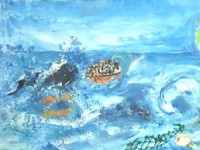 Picture of the month showcases some paintings, photos or other graphical work connected to activities of Mundus maris or of people whose work is closely related to the objectives of protecting the sea and the people of the sea.
Exhibitions Article Count: 14
 This category contains reviews of exhibitions of a scientific, artistic or mixed natures related to sustainable seas, nature and people of the sea.
Films Article Count: 7
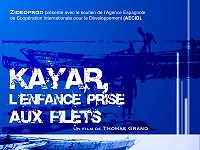 This categories contains reviews of films related to science, arts or mixed themes touching on the seas and people of the sea.
Book and music reviews Article Count: 10
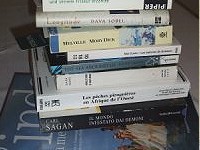 This category contains book and music reviews pertaining to science, arts, culture, history or mixed content related to the seas or the people of the sea. More technical and science book presentations and reviews are in the section publications.
Other activities Article Count: 72
 This section proposes reviews and descriptions of other activities related to the objectives of Mundus maris as they relate to the protection of the marine environment and the people of the sea. They are organised by other organisations and initiatives to which we want to draw attention as common resources and for sharing experiences. We cover cultural, scientific, artistic matters, and more.
Youth Network Article Count: 0
This section is the "house" of the youth groups and schools that collaborate with Mundus maris. Each group has their "room" in the house that reflects its uniqueness and special activities. The house will also have some common facilities for groups, especially when they participate in joint activities.
The "house" is currently primarily a construction site and shows projects and exhibitions that have been organised previously by Mundus maris as basic activities. Another part of the basic equipment of information and background materials can be found in the sections on Publications and Links. More basic information is in the sections "Plundered Oceans" and "What to do?".
For schools or youth groups that participate in the Netwerk and therefore want to strengthen their own activities, there is a proposal for self-presentation.
Your financial support of the youth network and its activities working towards sustainable seas and the protection of cultural diversity is urgently needed and highly desirable. Special account Mundus maris:
| IBAN: | BE54 | 0688 | 9178 | 6297 | BIC / SWIFT: | GKCCBEBB |
Mundus maris in Brazil Article Count: 2
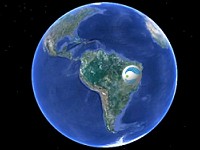 Brazil's fauna and flora has been legendary ever since naturalists from different countries came to study it in the 19th century. These early scholars were often also impressed by the local knowledge of people living in close dependency of terrestrial and aquatic ecosystems. Brazil's own scientists are studying the megadiverse ecosystems of this huge and diverse country today and looking for ways the make their results accessible to the wider public.
Mangroves fringe many of Brazil's tropical coasts. Fishing communities have often been grouped in colonias, which also affected their social organisation. The gap between some more traditional communities and the recent efforts to build up more industrial-type fishing remains stark.
Here is but a beginning of a connection to young people in this vast country.
Mundus maris on the coast of Ecuador Article Count: 1
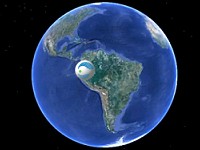 Ecuador - as the name suggests - sits on the equator line of the Pacific coast of South America. The coast of its mainland territory straddles the northern boundaries of the cold Humboldt Current reaching up towards the south of the country, while most of its coastal ecosystems are tropical and sub-tropical. The Galapagos Islands, a group of volcanic islands grouped around the equator, also belong to Ecuador. The islands are a Unesco World Heritage site and a unique marine and terrestrial environment hosting many endemic species with roots to forebears on the continent that is some 972 km away to the east.
The northern part of the coast on the mainland is a relatively sparsely populated part of the country with modest communication infrastructure. One of the traditional activities in the small villages distributed along the coast was fishing. The increasing urbanisation, efforts to develop the coastline for tourism and overfishing mostly by bigger boats operating out of larger ports now poses some serious risks to the integrity of the coastal ecosystems - both on land and in the ocean.
Mundus maris, in collaboration with the Fundación Santiago de Guayaquil, is supporting awareness creation and activities for nature protection and recognition of rights of coastal communities.
Mundus maris in Gambia Article Count: 4
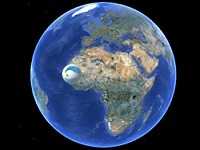 The Gambia is undergoing rapid urbanisation in the coastal parts radiating out from Banjul and Serrekunda. Further inland and nearer the southern and northern borders to Senegal rural conditions persist.
Five schools participated in pilot activities to test how best to introduce ecosystem approach to fisheries into the syllabus, promoting an integrated understanding that covers environmental, social, economic and science aspects of using the sea in sustainable ways. They are respectively, three from Gunjur, one from Tanji and one from Serrekunda. The pilot activities were part of commissioned work by the EAF Nansen Project of the FAO.
Supporting the teachers, the equipment of schools, parent associations and networking among schools are priorities to create a stronger enabling environment for the kids. They much deserve additional opportunities to live up more fully to their potential.
Mundus maris in Germany Article Count: 3
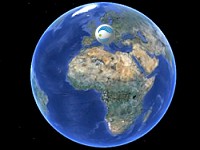 The Working Group Science and Arts for Sustainability of the Helmholtz-Gymnasium Hilden (HGH) has been setting the tone for collaboration with Mundus marisin Germany. This collaboration started in earnest with their successful participation in the Amsterdam exhibition 'Sustainable Seas Through the Eyes of Art' and continued with exhibitions in Brussels and at home.
Since 2009, Ansgar Beer, the couch of the working group and founding member of Mundus maris, has been elected Responsible Teacher for Sustainability at the school... with interesting results as can be seen from the graphical encouragement for healthy food and much more. Read on in the section about the HGH.
Other schools are, obviously welcome to join as well.
Mundus maris in the Niger Delta Article Count: 5
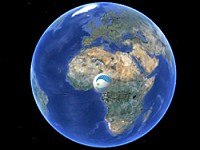 Encouraged by Stella Williams, founding member of Mundus maris asbl, a group of scientists and social workers started engaging and developing a work programme to increase activities in the Niger Delta and connect more strongly with forthcoming exhibitions and other events of the Initiative in an attempt to foster non-violent options for young people to shape their lives.
The mid-term goal is to set up a resource centre where young (and not so young) people can get information, learn new skills, including computer skills and network. The Oloibiri Resource Centre takes its name from the place, where oil was first discovered in the Niger Delta in 1958, now synonymous with pollution and often violence. It should become a beacon of hope, learning, solidarity, and constructive activities for a better future. To make this happen, Mundus maris is contributing some equipment, books and other support, but the lion's share is the energy and dedication of local associates of the Initiative and their ability to extend the network of solidarity.
On the road to setting up the centre and participating ever more actively in Mundus maris activities, an exhibition has taken place in late October 2010 to engage more young people and to select the best works for display in the international exhibition in Hilden, Germany, as part of several events organised by Mundus maris.
For financial support for setting up the Oloibiri Resource Centre for sustainable seas and cultural diversity, and for helping to fund its activities, make your financial contribution to
Special account Mundus maris, please mention 'Oloibiri Resource Centre':
| IBAN: | BE54 | 0688 | 9178 | 6297 | BIC / SWIFT: | GKCCBEBB |
School in Russia seeks partnership Article Count: 2
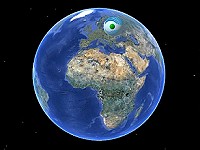 Russian schools have a reputation of delivering strong education, particularly in the natural sciences. Language barriers have not facilitated much cooperation with other countries.
In the context of UNESCO's Baltic Sea Project, some form of cooperation has, however, been going on for more than 20 years involving schools from all riparian countries.
Mundus maris in Senegal Article Count: 9
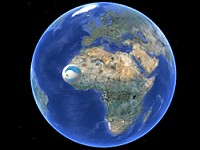 Collaboration with schools in Senegal is going on with ups and downs since 2008. Many young people and even more so their elders are torn between somewhat more traditional modes of living and having to adjust to new conditions, particularly as a result of advanced erosion of nature's wealth from overfishing in the sea and overuse or lack of fertile soils and water on land. Many communities have witnessed loss of income and wellbeing over the years and young people with modest access to education face particular difficulties in building a prosperous and secure future for themselves.
Those not able to make ends meet may be pushed into clandestine emigration in search of a better future in Europe or elsewhere. Many risked a hazardous journey on a pirogue in the direction of Las Palmas or other places but did not reach their destinations, nor did they come back.
Connecting to other young people in Europe and elsewhere and building a network of solidarity that allows them to improve their lot is one of the ambitions of the youth of the CEM Cayar and others.
Mundus maris in Uppsala, Sweden Article Count: 1
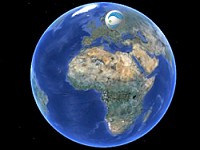 The Master students at the Swedish University of Agricultural Sciences in Uppsala taking courses in rural development are grappling with sustainability issues that go beyond narrow disciplinary knowledge. Thanks to the initiative of Dr. Linley Chiwona-Karltun the standard academic education is complemented by seminars and mentoring by internationally renowned practitioners and academics, such as Prof. Stella Williams. By bringing social awareness and respect for different perspectives into the academic classroom in an interactive manner, the students can confront what they have learnt so far and discuss the many questions they have with experienced persons.
The approach of Mundus maris of crossing sciences and arts in an action-oriented way prepares them for more reflexive action in their future jobs. Read on about the initial activities in Uppsala.
Publications Article Count: 0
 Contains references and links to publications of relevance to the Initiative.
Scientific Publications Article Count: 13
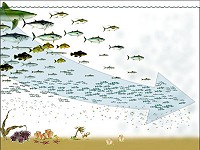 Links to scientific publications relevant to sustainable seas, coasts and the people of the sea or to portals and other easily accessible entry points to scientific publications and information.
General Public Article Count: 12
 Links to general public information relevant to sustainable seas. We provide only links to validated websites, however, we can not take responsibility for the content of these websites.